Fostering Innovation: Lots of Little Fires or One Inferno?
June 3, 2008 9 Comments

An area that I find really interesting is role that social media can play in improving innovation. Before the advent of social media applications, innovation needed two primary drivers:
- Someone with the passion and time to see it through
- The luck that someone’s offline social sphere picked up on an idea and helped spread it
Today, innovation can occur much more easily than before, courtesy of social media. An idea can be disseminated and discussed far beyond (i) the originating person’s social sphere; and (ii) their level of energy to pursue it.
Which brings me back to the ongoing discussion about distributed conversations. Is innovation the product of lots of little conversational fires or one raging talk inferno? The answer is ‘both’, but I think people have undervalued the potential in lots of little fires.
The Myth of the Iconic Genius
Recently, Malcolm Gladwell wrote a great article for The New Yorker, In the Air – Who says big ideas are rare? The piece examines the history of innovation, with Alexander Graham Bell’s role in inventing the telephone as a case study. Turns out Bell wasn’t the only one working on the telephone. Elisha Gray also had a working telephone at the same time. As Gladwell describes it, this is but one example of what science historians call “multiples” – cases of simultaneous invention by completely independent persons. It happened in calculus, evolution, decimal fractions, and many, many other fields.
After discussing the findings of two researchers, Gladwell puts context to the common occurrence of “multiples” in history:
For Ogburn and Thomas, the sheer number of multiples could mean only one thing: scientific discoveries must, in some sense, be inevitable. They must be in the air, products of the intellectual climate of a specific time and place.
In other words, it’s a fallacy to think that innovation only channels through one singular genius. Which brings us back to this idea that distributed conversations are a bad thing.
The Value of Lots of Little Fires
Lets use innovation inside the enterprise as an example. An employee comes up with an idea. Not a perfect idea, perhaps not a fully formed idea. But an idea that’s got some shine to it. I hope that sounds plausible to you if you work inside a corporation. It rings true to me.
Assume the company has a good platform for this employee to propagate it. She blogs the idea on some internal web application. Other people pick up on the idea. Now stop here for second.
If her idea is to gain traction, what makes the most sense? Employees from other departments, divisions, countries all interacting with this person they don’t know? Or employees thinking through the idea with their own social circle?
I argue that employees should be free to discuss the idea how they want and with whom they want. Why? It goes back to the observation of Ogburn and Thomas – invention is often the product of current broader thinking and prior discoveries. Inside a company, this likely means an emerging issue or opportunity that employees are starting to sense.
Little fires become big fires because they burn areas that are dry and ready to ignite. In the same way, letting employees hold their own conversations is a great way to find those patches of dry tinder that are ready for your idea. Some conversations will snuff out due to lack of good kindling. But other conversations will grow as the sparks from the originating fire find lots of wood to burn.
And that’s the importance of distributed conversations. You never know from where the energy and support for your idea is going to come.
Don’t Underestimate the Value and Motivations of People
So little conversational fires are important for building a buzz inside your company. What else do they do?
- Provide different perspectives from outside your sphere
- Motivate employees to care about your idea
In our company example, lets say the originator of the idea is in Field Operations. She knows the customers well and has a good sense of what they’re feeling. So she writes up her idea in a blog post.
But her idea would affect a lot of different groups: product, operations, development, finance, marketing, sales, etc. Each of these departments will have a unique understanding of the idea’s requirements. Would you force all of these different perspectives through that one blog? Of course not.
Stepping outside the employee motif for a second, I think it’s important to understand that people have different experiences, interests and talents. And they have their existing peers with whom they talk. When it comes to discussing a newly presented idea, it’s unnatural to force them to abandon these existing connections and prior conversations. If that means the originating author has to chase down the conversation, so be it.
Stepping back into the employee motif, the other value of little fires is the motivational aspect. If you want an idea to take hold, you have to relinquish some control of it. If you don’t don’t, you’re going to run right into a wall of indifference.
This sounds bad to say – aren’t employees only interested in the greater company good? Maybe. But lets not make that the only basis for the success of an idea. Acknowledge that people work hard and have ambitions. The little fires of distributed conversations give them ownership of the idea within their particular social sphere. They can point out the flaws, come up with improvements and relate the idea to previous thinking.
Forcing everyone back through the originating blog post loses this dynamic, and you’ve just killed the personal motivation of some people to participate.
But Isn’t This All Messy?
Yes. It is.
Proper recognition for the idea will be an issue. Going back to Malcolm Gladwell’s article, he lists a number of people who came up with an idea at the same time as more famous inventors and discoverers. But they didn’t become household names (e.g. Elisha Gray).
Also, as different groups work through an idea, fiefdoms might emerge. Different groups laying claim to having the best vision and plan for the idea. Who’s right and who should drive it forward?
But here’s the good news – the idea got traction. Senior managers are well-paid to figure out the other issues (I’ll pause here for your Dilbert snicker…).
Now if the company’s blogging software is any good, the original author of the idea will be recognized. And more than likely, our heroine was involved in several of the distributed conversations that occurred. She is not divorced from the whole innovation process.
Final Thoughts
Distributed conversations are an important component of gaining traction for innovative ideas. They enable a greater percentage of ideas to come to fruition than in traditional company settings where dialogue is limited to your own social sphere.
I’ve used life inside the enterprise to describe why distributed conversations have value. I think a lot of the same motivations apply out on the world wide web as well. If you’re a blogger and you think you’ve got a good idea or insight, recognize that you most likely were not the only person thinking that way. So don’t be too bothered when little conversational fires start elsewhere – your spark landed in some dry tinder.
Grab some marshmallows and join the fun.
*****
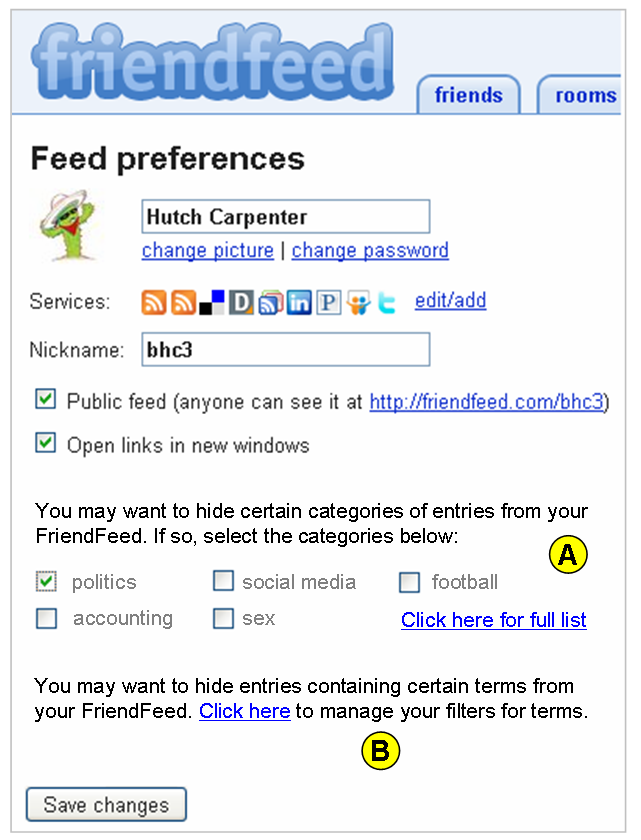
See this item on FriendFeed: http://friendfeed.com/search?q=%22Fostering+Innovation%3A+Lots+of+Little+Fires+or+One+Inferno%3F%22&public=1




 I'm Not Actually a Geek
The Conversation